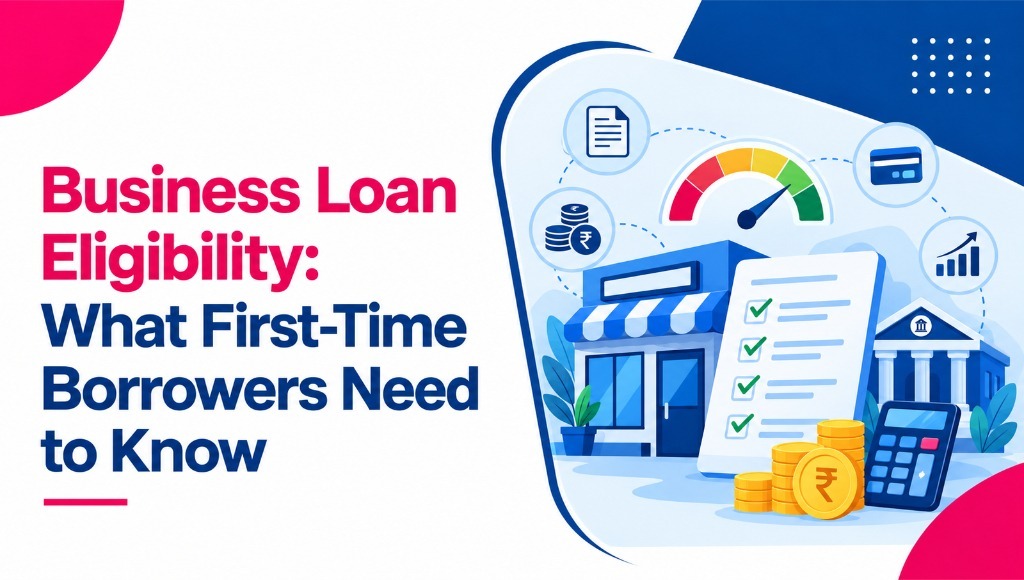
Prior to making an application for a business loan, it is essential for one to understand whether his or her business fits the requirements of the lender. There are generally five things that are considered by lenders, which include the following: business profile, length of time business has been around, credit score, income and repayment capabilities. This will allow one to gather the correct documents, make the right amount of money requests, and prevent oneself from being turned down, which would have a negative impact on future applications.
What Is Business Loan Eligibility?
Business Loan eligibility requirements are the factors that the business entity and its owner need to satisfy in order to be considered a good candidate for receiving the loan. They help the creditor determine if you qualify for that certain type of loan.
These requirements are based on the financial standing and stability of the borrower and his business entity. Lenders want to see that you have stable income, manage finances in a responsible manner, and are able to make regular repayments of the debt. Meeting the above mentioned requirements will not guarantee you the loan approval. It simply means that you can go further with the application process.
What Are the Business Loan Eligibility Criteria for First-Time Borrowers?
Business Profile and Type
The type of business you conduct will determine how your loan application is reviewed. A trader dealing with fast moving goods will have varying cash flows compared to a manufacturer purchasing equipment or a consultant whose business mainly involves service provision. The lenders provide services for MSMEs, retailers, traders, manufacturers, and service businesses, although each is reviewed based on its operations and revenue generation.
Business Vintage and Operational Stability
“Vintage of a business is the period for which the business has been running.” It is considered by banks as the vintage of a business helps them in assessing the performance of that business over a period of time. Different lending institutions have different minimum operational periods.
Income and Repayment Capacity
This is often the most important factor. Lenders look at your income, cash flow, existing loans or credit card dues, and the estimated EMI on the new loan. If current commitments already take up a large share of your income, a lender may offer a smaller amount. Choose a loan amount your business can repay comfortably, even in a slow month.
Credit Profile and Financial History
Your credit history shows lenders how you have handled borrowing in the past. Timely repayments signal financial discipline. There’s an important difference here. Having limited credit history simply means you haven’t borrowed much before. Having a poor credit record means past repayments were missed or delayed. First time borrowers usually fall into the first category, and lenders may rely more on business income and records in that case.
Documentation and Business Records
Most business loan requirements include proof of identity, address, business registration, and financial records such as bank statements, income tax returns, and GST filings where applicable. Complete and accurate documents help lenders verify your details quickly and reduce processing delays.
Business Loan Eligibility for Different Types of Applicants
MSMEs & Small Business Owners
Small businesses tend to take loans for operational funding or expansion of business. Proper cash flow documentation helps prove the purpose and repayment plans for the loan amount.
Self-employed Professionals
Doctors, consultants, architects, etc., must update their tax forms, bank statements, professional registration documents, etc., before applying.
Retailers and Traders
Let us take the case of a clothing shop owner who is getting ready for the festive season. She requires additional stock two months before the season. This is why, with proper loan and repayment plans based on the festive season sales, she can pay her EMI easily.
Manufacturing and Service Industries
The need for funding in the manufacturing industry could be for equipment or expansion of capacity. In the service industry, there could be funding for investment in technology or opening up another location. It depends on the objective behind the loan.
How Can First-Time Borrowers Improve Their Business Loan Application?
- Be precise about keeping your books. Update your books and bank statements regularly and ensure that your tax return is filed properly.
- Make payments of your previous dues on time. Making timely payments will always enhance your credit history.
- Be consistent. Your name, address, and business should be the same throughout the application process.
- Lend only as per need. The amount you want should reflect a genuine purpose for borrowing.
- Afford the monthly installments. Look at your monthly finances and see how much you can repay each month.
- Know the entire deal. Make sure that you know the interest rate and other charges involved in the offer.
Secured vs. Unsecured Business Loans: What Should Beginners Know?
| Factor | Secure Loan | Unsecured Loan |
| Collateral | Required (property, machinery, etc.) | Not required |
| Financial Assessment | Considers both collateral and finances | Relies more on income and credit profile |
| Repayment Obligation | Missed payments may put collateral at risk | Missed payments affect credit history and may lead to recovery action |
What Should You Do Before Applying for a Business Loan?
- Check the loan eligibility criteria of the lender.
- Prepare all documents in advance.
- Figure out an EMI you can pay.
- Consider all factors such as interest rates and other charges.
- Give correct details about yourself.
- Go through the offer before accepting it.
Conclusion
Borrowing for the first time becomes much simpler when you know what the lenders look out for. With an understanding of eligibility criteria, organized documentation and your capacity to repay, you can borrow smartly. The criteria vary from lender to lender, hence it makes sense to learn about it from a reputable lender such as HDB Financial Services. Find out more about business loans at BrowseLoan.
FAQs
- What are the basic criteria lenders check for a business loan?
Lenders usually review your business profile, operating history, income, credit history, repayment capacity, and documents. - Can first-time borrowers apply for a business loan?
Yes. First-time borrowers can apply, provided they meet the lender’s criteria and can show stable income and proper records. - Can I get a business loan without a previous credit history?
It may be possible. Some lenders consider business income, bank statements, and tax records when credit history is limited. Policies vary by lender. - What documents are required for a business loan?
Typically identity and address proof, business registration proof, bank statements, income tax returns, and GST returns where applicable. The exact list depends on the lender. - Does business turnover affect loan eligibility?
Yes. Turnover and cash flow help lenders judge how much your business can comfortably repay. - Does meeting the eligibility criteria guarantee loan approval?
No. Eligibility allows your application to be considered, but approval depends on the lender’s complete assessment.