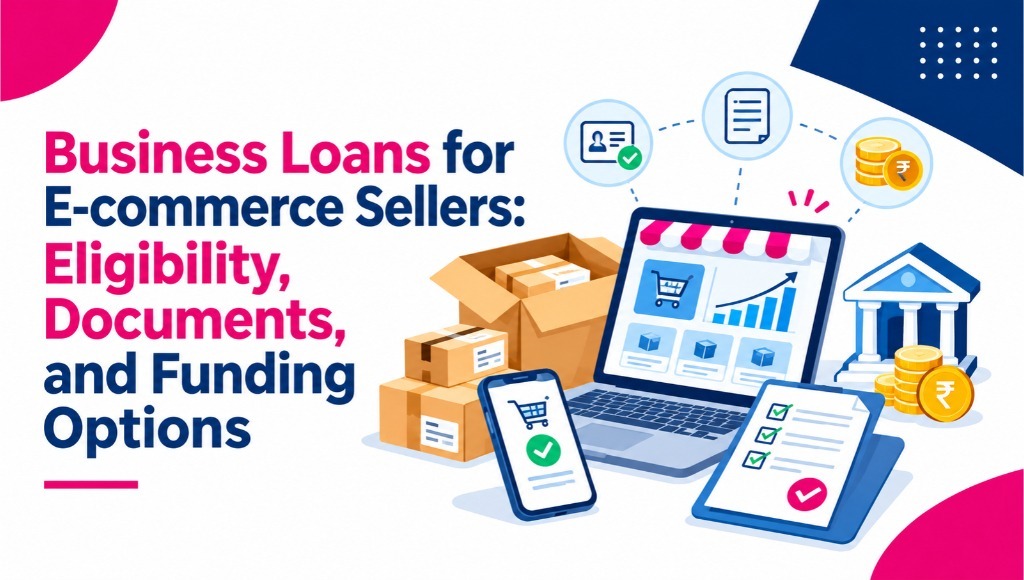
Ecommerce and marketplaces have become popular avenues for business ventures in recent times. However, operating an ecommerce business involves consistent investments in inventory, packaging, advertisement, logistics, and technology. For those intending to grow their ecommerce business, having access to timely finance can be quite helpful. Business Loans in Ahmedabad can be a financing option for eligible local ecommerce sellers to the financing needs of local ecommerce business owners. Familiarizing oneself with the available financing sources, eligibility criteria, and documents that may be needed for business loans can be important. This article provides information on the different types of financing sources available to ecommerce businesses.
Quick Answer: What Is an Ecommerce Business Loan?
An ecommerce business loan is financing provided to eligible online sellers to support business expenses such as inventory purchases, marketing, packaging, logistics, and expansion. Depending on the lender, sellers may access term loans, working capital facilities, or other credit options. Approval generally depends on business performance, credit history, income, repayment capacity, and submitted documents.
Why Do Ecommerce Sellers Need Business Loans?
An online business not only entails getting customer orders. The seller has to keep stock, pay suppliers, deal with returns, advertise, and make deliveries on time.
The costs incurred by sellers are likely to rise during festive seasons, promotional events, and when expanding the business. Enough working capital enables the sellers to cope with these demands without disrupting their day-to-day activities.
Common Reasons Online Sellers Need Financing
Ecommerce businesses may require additional funds for several reasons:
- Purchasing inventory: Buying products in bulk to maintain sufficient stock and meet customer demand.
- Managing seasonal demand: Preparing for higher sales during festivals, holiday seasons, and online shopping events.
- Digital marketing: Investing in paid advertisements, social media campaigns, and search engine marketing.
- Packaging and delivery: Improving packaging materials, shipping arrangements, and order fulfilment.
- Marketplace expansion: Selling products through additional platforms such as Amazon, Flipkart, and other online marketplaces.
- Website and technology upgrades: Improving website performance, payment systems, inventory management, and customer experience.
A suitable financing arrangement can help businesses manage these expenses while maintaining adequate cash flow.
What Are Business Loans for Ecommerce Sellers?
Online sellers’ business loans are types of credit which are available to qualifying online sellers and are used to cover their operational costs and expand their businesses.
This is different from personal credit since business funding is supposed to cover business expenses only. Depending on the type of credit offered, money can be used to buy stock, pay suppliers, do marketing, purchase new equipment, technologies, and grow a business.
While some lenders offer flexible business loans that are available to online sellers too, there are those who offer specialized loans.
Business Loan Eligibility Criteria for Ecommerce Sellers
Business loan eligibility depends on the applicant’s financial position, business structure, operating history, and the lender’s underwriting policy.
Before applying for an ecommerce business loan, sellers should review the following common eligibility factors.
Basic Eligibility Requirements
- Applicant’s age: The applicant must meet the lender’s minimum and maximum age requirements.
- Residency: The applicant must satisfy the lender’s Indian citizenship or residency requirements, as applicable.
- Business operating period: Some lenders require the business to have operated for a minimum period.
- Business registration: The applicant may need to provide valid business registration and ownership details.
- Business turnover: Consistent revenue and sales records can help demonstrate business performance.
- Credit score: A good credit history can improve the applicant’s chances of meeting lender requirements.
- Repayment capacity: Lenders assess income, existing financial obligations, and the ability to repay the proposed loan.
There is no single eligibility formula applicable to every business loan. Minimum turnover, credit score, business vintage, and income requirements vary between lenders.
Can Amazon and Flipkart Sellers Apply for Business Loans?
Yes. Eligible sellers operating through Amazon, Flipkart, and other online marketplaces may apply for business financing.
Lenders may consider the following information when assessing an online seller:
- Marketplace seller account details.
- Monthly and annual sales reports.
- Order and transaction history.
- Bank account statements showing business receipts.
- GST returns and income tax records, where applicable.
- Business profitability and existing financial obligations.
Marketplace sales history can help demonstrate business activity, but high sales alone do not guarantee loan approval. Lenders also consider profitability, repayment capacity, credit history, and other eligibility requirements.
Documents Required for an Ecommerce Business Loan
Preparing the required paperwork before applying can help make the loan application process more organised.
The documents required for business loans depend on the lender, business structure, and financing product.
Personal KYC Documents
Applicants may need to provide:
- PAN card.
- Aadhaar card.
- Passport, voter ID, or another accepted identity document.
- Residential address proof.
- Recent passport-size photographs, if requested.
Business Registration Documents
Common business-related documents include:
- GST registration certificate, where applicable.
- Udyam Registration Certificate, where applicable.
- Business registration certificate.
- Shop and Establishment registration, where applicable.
- Partnership deed for partnership firms.
- Certificate of incorporation and company documents for registered companies.
Financial Documents
Lenders may request:
- Bank statements for the previous 6–12 months.
- Income Tax Returns for the relevant financial years.
- Profit and loss statements.
- Balance sheets, where applicable.
- GST returns, where applicable.
- Cash flow statements or other financial records.
Ecommerce Business Proof
Online sellers may also be asked to submit:
- Amazon or Flipkart seller account details.
- Marketplace sales reports.
- Order and transaction history.
- Sales invoices.
- Business website or online store details.
- Settlement statements showing marketplace payments.
Important: Not every lender requires all these documents. Applicants should confirm the latest document checklist directly with the lending institution before submitting an application.
What Are the Different Funding Options for Ecommerce Sellers?
Ecommerce businesses can explore different types of financing depending on their operational requirements, repayment capacity, and business goals.
1. Unsecured Business Loans
Unsecured business loans do not generally require borrowers to pledge property or other assets as collateral.
Eligible ecommerce sellers can explore these loans for inventory purchases, advertising, supplier payments, and other business expenses.
Approval depends on the lender’s credit assessment, financial requirements, and repayment criteria.
2. Working Capital Loans
Working capital loans help businesses manage short-term operational expenses.
Online sellers may use working capital financing for:
- Purchasing inventory.
- Paying suppliers.
- Managing packaging and shipping costs.
- Handling seasonal demand.
- Maintaining regular business operations.
This option can be useful when a business has regular expenses but receives customer or marketplace payments at different intervals.
3. Business Overdraft Facilities
A business overdraft provides access to an approved borrowing limit through a bank or financial institution.
Businesses can withdraw funds as required, subject to the agreed conditions and available limit.
It can help ecommerce sellers manage temporary cash flow gaps, supplier payments, and unexpected operational expenses.
4. Term Loans
Term loans provide a lump sum that borrowers repay over an agreed period through scheduled instalments.
Ecommerce businesses may consider term loans for:
- Expanding warehouse facilities.
- Purchasing equipment.
- Upgrading business technology.
- Expanding product categories.
- Investing in long-term business infrastructure.
The repayment tenure, interest rate, and loan amount depend on the lender’s assessment.
5. Invoice Financing
Invoice financing allows eligible businesses to access funds against approved unpaid invoices.
It can be useful for ecommerce businesses that also supply products to retailers, distributors, or corporate customers and experience delayed payments.
However, this option is more relevant to businesses with eligible receivables. Standard marketplace orders do not automatically qualify for invoice financing.
6. Marketplace-Based Seller Financing
Some online marketplaces and financial institutions work with lending partners to provide financing options for eligible sellers.
Depending on the arrangement, lenders may assess:
- Marketplace transaction history.
- Sales consistency.
- Seller account performance.
- Business revenue.
- Banking records and repayment capacity.
Availability and eligibility differ across marketplaces and lending partners. Sellers should verify whether an offer comes from a regulated lending institution and review its complete terms before accepting it.
Conclusion
Access to suitable financing can help ecommerce sellers maintain inventory, manage operational expenses, improve marketing activities, and expand their businesses. However, selecting the right funding option requires a clear understanding of loan eligibility, documentation, repayment capacity, and borrowing costs.
Entrepreneurs exploring Business Loans in Ahmedabad should compare available options and check lender-specific requirements before applying. Whether you need working capital, an unsecured business loan, or funds for expansion, choosing financing that matches your business cash flow is important.
Explore suitable business loan options through BrowseLoan and take an informed step towards supporting your ecommerce business growth.
Frequently Asked Questions
- Can Ecommerce Sellers Get a Business Loan in Ahmedabad?
Yes. Eligible ecommerce sellers operating in Ahmedabad can apply for business loans through banks and NBFCs. Approval depends on factors such as business performance, credit history, turnover, repayment capacity, and documentation. - What Is the Minimum Credit Score Required for an Ecommerce Business Loan?
There is no universal minimum credit score for every ecommerce business loan. Individual lenders establish their own credit requirements. A stronger credit profile and consistent repayment history may improve the chances of approval. - Can Amazon and Flipkart Sellers Apply for Business Loans?
Yes. Amazon and Flipkart sellers may apply for business loans if they meet the lender’s eligibility requirements. Marketplace sales reports, transaction history, bank statements, and financial records may help demonstrate business performance. - Can I Get a Business Loan Without Collateral?
Yes. Some lenders offer unsecured business loans without requiring borrowers to pledge property or other assets. However, approval depends on creditworthiness, business financials, repayment capacity, and lender-specific conditions. - How Much Business Loan Can an Online Seller Get?
The loan amount depends on the seller’s turnover, profitability, credit profile, banking history, existing liabilities, and lender policies. There is no fixed loan amount applicable to every online seller. - Can a New Ecommerce Business Apply for a Business Loan?
New ecommerce businesses can explore financing options, but some lenders require a minimum operating history and established revenue. Startups may need to consider alternative funding options depending on their business stage and eligibility.
References
- RBI – Digital Lending Directions, 2025 – Digital lending regulations and borrower protection.
- RBI – Key Facts Statement for Loans and Advances – Loan cost transparency and APR.
- Ministry of MSME – Know Your Lender, Grow Your Business – General MSME loan application and documentation guidance.
- State Bank of India – Commercial Loan FAQs – Commercial loan applicant categories and documentation.