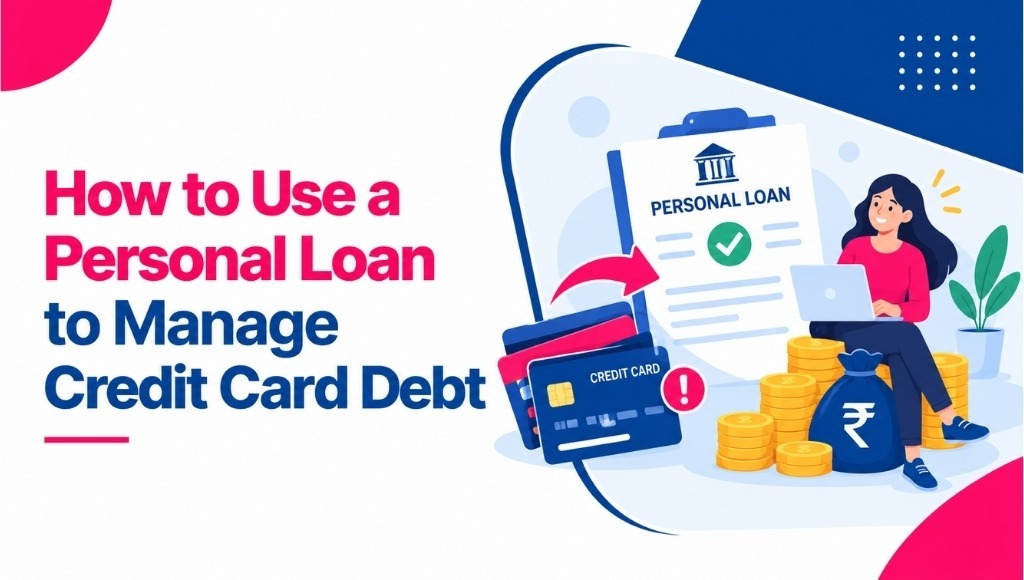
A personal loan may help manage revolving card balances by combining outstanding amounts into a fixed repayment plan. This can simplify repayments and may reduce borrowing costs if the new loan’s total cost is lower than the cost of carrying card balances. Revolving balances can become expensive because interest may continue to apply to unpaid amounts. The Reserve Bank of India (RBI) requires card issuers to disclose annualised percentage rates and warn customers that repeatedly paying only the minimum due can stretch repayment over months or years. Before switching, compare the loan’s interest rate, fees, tenure, EMI, prepayment terms and total repayment amount. If you are comparing a Personal Loan in Ahmedabad, focus on regulated lenders, clear disclosures and EMI affordability rather than the advertised rate alone.
How Does a Personal Loan Help Manage Card Balances?
Consolidates Multiple Credit Card Balances
If you have balances on several cards, a personal loan can be used to clear eligible amounts and replace multiple payment dates with one EMI. This does not reduce the principal automatically, but it can make repayment easier to track.
Instead of monitoring different due dates and minimum payments, you have a single scheduled repayment to plan for each month.
Provides a Fixed Repayment Schedule
A term loan generally has a defined tenure and scheduled EMIs. Knowing the repayment amount and expected end date can make monthly budgeting more predictable than revolving balances. Check whether the interest rate is fixed or floating and whether any term can change during repayment. The EMI should fit comfortably within your regular monthly cash flow.
May Reduce Interest Costs
A personal loan can reduce financing costs only when its overall cost is lower than the cost of continuing to carry card balances. Compare the card’s applicable APR with the loan’s APR or all-in cost, including processing and other charges. RBI’s Key Facts Statement framework is intended to help borrowers review important loan costs and terms before accepting covered retail term loans.
For example, a hypothetical ₹1,20,000 loan at 18% annual interest for 24 months would have an EMI of about ₹5,991 and scheduled interest of about ₹23,781 before fees. This is only an illustration; actual rates, charges and eligibility vary by lender and borrower profile.
How to Use a Personal Loan to Pay Off Card Balances
Step 1 – Calculate Your Total Outstanding Amount
Start by listing each card’s:
- Current outstanding balance
- Applicable interest rate or APR
- Minimum amount due
- Payment due date
- Overdue or late-payment charges, if any
Add the balances using your latest statements so that recent transactions, payments and refunds are reflected. This gives you a clearer estimate of how much you actually need to borrow.
Step 2 – Check Your Credit Profile
Credit history can influence loan eligibility and pricing. TransUnion CIBIL states that payment history, credit utilisation, age of credit and enquiries are among the factors affecting a CIBIL Score. Review your credit report before applying. Check active accounts, outstanding balances and repayment history. If you find information or an enquiry you do not recognise, you can raise a dispute and contact the relevant lender.
Step 3 – Compare Personal Loan Options
Do not choose an offer based only on the advertised interest rate. Compare:
- Interest rate and APR
- Processing and administrative fees
- Loan tenure
- Monthly EMI
- Prepayment or foreclosure conditions
- Penal or late-payment charges
- Total amount repayable
Read the lender’s Key Facts Statement and sanction terms carefully. RBI’s framework requires applicable regulated entities to provide key loan information, including important cost details, in a standardised format.
Step 4 – Borrow Only the Required Amount
Borrow only enough to clear the selected balances. Taking a higher amount simply because you qualify for it increases the principal. That can result in a higher EMI, greater total interest cost or a longer repayment period.
The objective should be to restructure existing obligations, not create additional discretionary borrowing.
Step 5 – Repay the Card Balances
After the loan is disbursed, use the funds for the intended repayments. Make payments through authorised channels and confirm that each amount has been successfully credited.
Check your next card statement as well. A small residual amount may sometimes remain because of interest, fees or transactions posted after the payment was made.
Step 6 – Repay the Personal Loan on Time
Set up automatic EMI payments where practical and maintain sufficient funds in the linked bank account before every due date. Track repayments throughout the tenure. Timely payments matter because repayment history is one of the factors considered in a consumer’s credit profile.
Also avoid rebuilding large card balances while the consolidation loan is still outstanding.
When a Personal Loan May Not Be Suitable
Consolidation may not be the right approach when:
- The new loan’s total cost is not meaningfully lower
- The EMI is difficult to accommodate within the monthly budget
- Processing or other charges remove the expected savings
- Card spending is likely to continue after consolidation
- Existing loans and EMIs already place significant pressure on cash flow
If a new loan only shifts the obligation without improving affordability, consider discussing available repayment options with your existing lender or seeking independent financial guidance.
How to Avoid Building Card Balances Again
Consolidation works better when it is accompanied by better repayment and spending habits.
Create a realistic monthly budget and keep discretionary spending within a defined limit. Pay card bills on or before their due dates and avoid treating the minimum amount due as a normal long-term repayment strategy.RBI rules require card issuers to warn customers that repeatedly making only the minimum payment can extend repayment over months or years and lead to additional interest costs.
It can also help to gradually build an emergency fund, monitor credit utilisation and avoid taking new loans for expenses that can be postponed.
Final Takeaway
A personal loan can be useful when it replaces expensive revolving balances with a structured repayment schedule and a lower overall borrowing cost. However, consolidation should not be judged by the headline interest rate alone. Compare the total repayment amount, processing fees, EMI, tenure, prepayment conditions and other applicable charges. Most importantly, make sure the monthly payment is sustainable throughout the loan term.
Before applying, visit the official website of the bank or RBI-regulated lender you are considering, request or download the applicable Key Facts Statement, and compare the complete borrowing cost before submitting an application.
Frequently Asked Questions
1. Is a personal loan always cheaper than carrying card balances?
No. It is cheaper only when the loan’s total cost, including interest and applicable fees, is lower than the cost of continuing with the existing balances.
2. Should I close my cards after paying them off?
Not necessarily. Consider annual fees, your spending habits, available credit and the possible effect on your overall credit profile before deciding whether to close an account.
3. Does applying for a personal loan affect my credit score?
A lender’s credit enquiry may be recorded on your credit report. CIBIL notes that frequent applications and multiple enquiries over a short period can affect a consumer’s credit profile.
4. Can I repay the personal loan early?
It depends on the lender and loan agreement. Check whether part-prepayment or foreclosure is permitted and whether any applicable charge would reduce the financial benefit of early repayment.
5. What should I compare before choosing a consolidation loan?
Compare the APR or overall borrowing cost, processing fees, EMI, tenure, total amount repayable, prepayment conditions and late-payment charges. The EMI should also fit comfortably within your monthly budget.
References
- Reserve Bank of India — Master Direction: Credit Card and Debit Card – Issuance and Conduct Directions, 2022, updated March 7, 2024.
- Reserve Bank of India — Annual Report 2024–25, including guidance on KFS and all-in loan cost disclosure.