Starting a business is rarely the hard part. Funding it is. According to Federal Reserve survey data, only around 43% of small businesses that applied for financing in recent years were fully approved, and startups face even steeper odds than established companies, since banks and approved financial institutions fully approve just 39% of business loan applications overall. Yet the funding landscape has genuinely broadened. First-time entrepreneurs, meaning applicants with less than two years of operating history, saw funded application volume increase 18% year-over-year in 2026, driven largely by alternative lenders willing to underwrite based on revenue and cash flow rather than years in business. This guide walks new entrepreneurs through the realistic funding options available today and how to position an early-stage application for the best possible odds.
Why Startups Face Tougher Lending Odds Than Established Businesses
Lenders price risk based on predictability, and a new business simply has less financial history to evaluate than one that has operated for several years.
What Makes Startup Applications Harder to Approve
- Limited or no revenue history to demonstrate repayment capacity
- Absence of established business credit, forcing lenders to weigh personal credit more heavily
- Higher perceived failure risk, since a meaningful share of new businesses close within their first few years
- Lack of collateral, particularly for service-based or digital-first startups with few physical assets
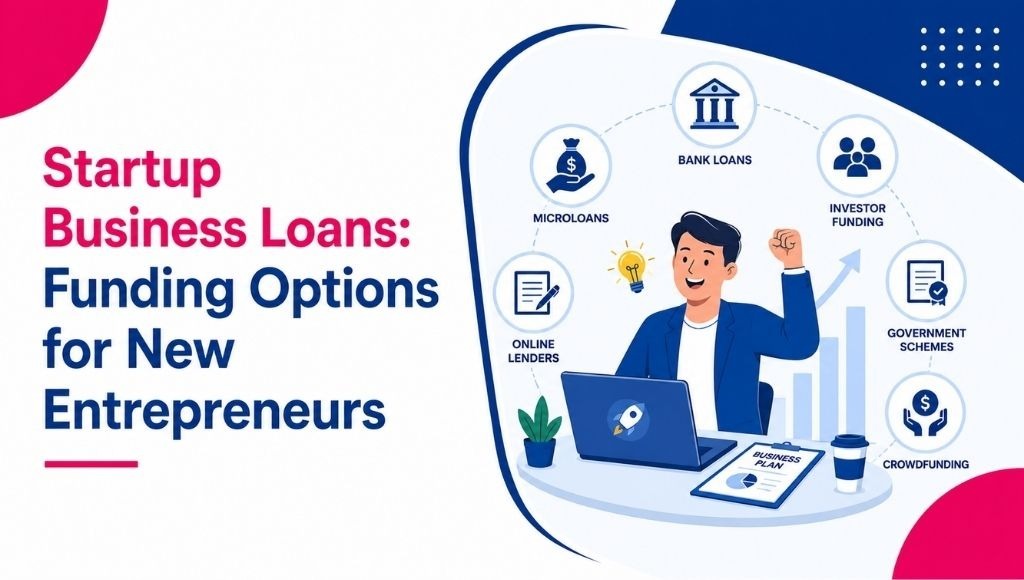
Traditional Bank Loans and SBA Programs
Conventional bank financing remains an option for startups with a strong personal credit profile and a solid business plan, though approval is far from guaranteed at this stage.
- SBA-backed loans reduce risk for lenders through a government guarantee, making them more accessible than a fully unsecured bank loan
- More than half of all SBA 7(a) loans approved recently were for amounts under $150,000, suggesting many founders use practical, smaller financing rather than chasing large loan amounts
- A detailed business plan with clear financial projections meaningfully improves approval odds at this stage, since lenders have little else to evaluate
Microloans for Early-Stage Businesses
Microloans, often issued through nonprofit lenders and community development institutions, are specifically designed to serve founders who do not yet qualify for conventional bank financing.
- Loan amounts typically range from a few hundred dollars up to $50,000
- Approval criteria tend to weigh business plan quality and community impact alongside credit history
- Many microloan programs pair funding with mentorship or business development support, which can be valuable for first-time founders
Revenue-Based and Working Capital Financing
For startups that already have some revenue, even if modest, revenue-based financing has become one of the fastest-growing funding categories available.
- Revenue-based funding grew 38% year-over-year in application volume, reflecting strong demand from service businesses and seasonal operators
- Repayment is tied to a percentage of revenue rather than a fixed monthly amount, which reduces pressure during slower months
- These products remain accessible to borrowers with credit scores as low as 550, since underwriting weighs cash flow more heavily than credit alone
Founders whose primary need is bridging short-term cash flow gaps rather than large upfront capital should also look into a working capital loan, which is structured specifically for this kind of short-term financing need rather than long-term expansion capital
Grants and Non-Dilutive Funding
Unlike loans, grants do not need to be repaid and do not require giving up equity, making them one of the most attractive funding sources when a startup can find one that fits.
- Federal opportunities can be found through official government grant portals, with state and city programs often available as well
- Grants are frequently tied to specific criteria, such as industry, founder demographic, or location
- Local Small Business Development Centers can help identify relevant grant programs and guide founders through the application process
Crowdfunding and Alternative Capital
For product-based startups in particular, crowdfunding offers a way to raise capital while simultaneously validating market demand before committing to full-scale production.
- Rewards-based crowdfunding allows pre-selling inventory to fund initial production runs
- Equity crowdfunding platforms let a broader pool of investors take a small stake in exchange for capital
- Peer-to-peer lending platforms connect individual investors directly with borrowers, sometimes approving applications a traditional bank would decline
Applying for a Business Loan in Ahmedabad as a New Entrepreneur
Local lending ecosystems can offer real advantages for early-stage founders, particularly where regional programs and NBFC lenders are more willing to work with limited operating history. A business loan in Ahmedabad can be a practical starting point for founders in the region, especially when paired with guidance on which lender categories are realistically accessible at the startup stage rather than applying broadly and hoping for the best.
Working With Local Loan Consultants
Navigating multiple lender types, each with different documentation and eligibility requirements, is one of the more time-consuming parts of early-stage fundraising. Experienced business loan consultants in Ahmedabad can help match a founder’s specific profile, industry, and funding need to the lenders most likely to approve the application, rather than spending weeks applying to mismatched options one at a time.
Also Read: 6 Mistakes Small Business Owners Make When Applying for a Loan
Common Mistakes New Entrepreneurs Make When Seeking Funding
Even well-prepared founders repeat a handful of avoidable mistakes that hurt their approval odds.
- Applying to a Tier 1 bank first without checking whether the business realistically meets its requirements
- Underestimating how much documentation lenders expect, even for smaller loan amounts
- Mixing personal and business finances, which makes it harder for lenders to evaluate actual business performance
- Failing to build any credit history, personal or business, before the first funding application
Many of these issues overlap with broader lending mistakes covered in our guide on common mistakes small business owners make when applying for a loan, which is worth reviewing alongside startup-specific guidance.
Frequently Asked Questions
Can a brand-new business get a loan with no revenue history?
Yes, though options narrow considerably. Microloans, grants, and some revenue-based financing products are designed specifically for early-stage businesses without extensive operating history.
Is it better to seek a loan or investor funding for a startup?
It depends on the founder’s goals. Loans preserve full ownership but require repayment regardless of business performance, while investor funding shares risk but dilutes ownership and control.
How much should a new entrepreneur expect to need before securing outside funding?
There is no fixed figure, but lenders generally look more favorably on founders who have already invested some personal capital, since it signals commitment and reduces perceived risk.
Building a Funding Strategy That Fits Your Stage
Rather than pursuing every funding option simultaneously, most successful founders sequence their approach, starting with grants and personal capital, layering in microloans or revenue-based financing once some traction exists, and reserving traditional bank or SBA financing for once the business has enough history to qualify comfortably. This staged approach tends to produce better terms overall than chasing a large loan too early in the business’s life.
Conclusion
Startup business loans are genuinely harder to secure than financing for an established company, but the funding landscape in 2026 offers far more realistic paths than a single bank application. Grants, microloans, revenue-based financing, and local lending consultants each serve a different stage of a founder’s journey, and matching the right option to the business’s current traction, rather than reaching for the largest loan available, consistently produces better outcomes for new entrepreneurs.