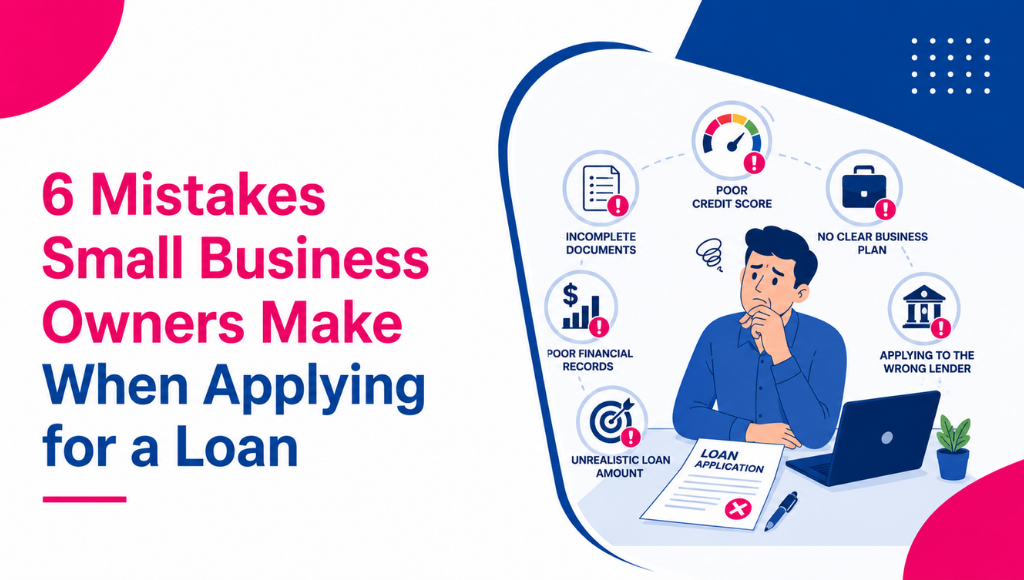
Access to timely financing can determine whether a business survives a slow season or scales to its next milestone. According to a TransUnion CIBIL report, MSME credit demand in India grew by over 30% in recent years, yet a significant share of applications continue to face delays or outright rejections. Studies suggest that nearly 50% of small business loan applications are turned down, not because the business is unviable, but because of preventable errors made during the application process.
For entrepreneurs seeking a business loan in Ahmedabad, understanding what lenders look for and what mistakes to avoid can dramatically improve approval chances and help secure better terms.
Why Do Small Business Loan Applications Get Rejected?
Common Reasons Lenders Deny Business Loans
Lenders evaluate risk carefully before approving any business loan. The most frequent reasons for rejection include:
- Poor credit history reflecting past repayment issues
- Incomplete or inaccurate documentation
- Insufficient or inconsistent cash flow
- Lack of a structured business plan
- Excessive existing debt relative to income
How Avoiding Mistakes Improves Loan Approval Chances
When you apply with proper preparation, the benefits are tangible:
- The approval process moves faster with fewer back-and-forth document requests
- Lenders are more likely to offer competitive interest rates
- A well-prepared application can unlock higher loan amounts
- Your credibility as a borrower increases, building stronger lender confidence
Key Mistakes That Reduce Your Chances of Business Loan Approval
Mistake #1: Applying for the Wrong Type of Business Loan
Understanding Different Business Loan Options
Not all business loans are built the same. Depending on your need, the right product could be:
- Term loans for long-term capital investments
- Working capital loans to manage day-to-day operational expenses
- Equipment financing specifically for purchasing machinery or tools
- Business lines of credit for flexible, revolving access to funds
- Government-backed or MUDRA loans for small enterprises and startups
Why Choosing the Wrong Loan Can Hurt Your Business
Picking a product that does not match your requirement leads to:
- Higher borrowing costs if the loan structure does not align with your revenue cycle
- Inadequate funding that leaves gaps in your business operations
- Repayment challenges if the tenure or instalment schedule does not suit your cash flow
How to Choose the Right Loan Product
- Clearly define what the funds will be used for
- Estimate how much capital is genuinely needed
- Compare interest rates, repayment terms, and eligibility criteria across loan types
Mistake #2: Not Checking Your Business and Personal Credit Scores
Why Credit Scores Matter to Lenders
Credit scores are among the first things a lender reviews. They help assess:
- The risk level associated with lending to your business
- The interest rate your application qualifies for
- Whether the application gets approved at all
Common Credit Score Issues
- A history of late payments across loans or credit cards
- High credit utilisation ratio on existing credit lines
- Errors or outdated information in your credit report
Steps to Improve Credit Before Applying
- Pull your credit report from CIBIL or Experian and review it thoroughly
- Clear any outstanding or overdue debts before submitting an application
- Dispute and correct inaccuracies with the credit bureau in advance
Mistake #3: Failing to Prepare Accurate Financial Documents
Documents Lenders Commonly Require
Incomplete paperwork is one of the top reasons applications stall. Lenders typically ask for:
- Profit and loss statements for the last 2 to 3 years
- Balance sheets showing assets and liabilities
- Bank statements for the past 6 to 12 months
- Income tax returns for the business and its owners
- Cash flow statements demonstrating repayment capacity
Consequences of Incomplete or Inaccurate Records
- Applications get delayed while lenders wait for missing documents
- Inaccuracies raise red flags and can result in outright rejection
- Your credibility with the lender is weakened, making future applications harder
Best Practices for Financial Documentation
- Maintain updated books of accounts at all times, not just before applying
- Use accounting software like Tally or Zoho Books to keep records organised
- Consult a chartered accountant to ensure financial statements are accurate and compliant
Mistake #4: Borrowing More or Less Than Your Business Needs
Risks of Over-Borrowing
Asking for more than you need is as risky as asking for too little:
- It increases your overall debt burden and monthly EMI obligations
- The additional interest compounds your total repayment cost significantly
- It can strain your cash flow if revenue does not grow as projected
Risks of Under-Borrowing
- You may run short of working capital mid-project, stalling operations
- It limits your ability to execute growth plans fully
How to Determine the Right Loan Amount
- Carefully evaluate your current operational expenses and gaps
- Forecast funding needs for the next 12 to 18 months
- Create a detailed utilisation plan that maps each rupee borrowed to a specific business purpose
Mistake #5: Ignoring Loan Terms and Total Borrowing Costs
Important Loan Terms to Review
Before signing any agreement, understand these elements clearly:
- The applicable interest rate and whether it is fixed or floating
- The loan tenure and its impact on monthly instalments
- Processing fees charged upfront by the lender
- Prepayment penalties if you want to close the loan early
- Late payment charges in case an EMI is missed
Understanding the Total Cost of a Business Loan
Many borrowers focus only on the interest rate and overlook:
- The Annual Percentage Rate (APR), which reflects the true cost including all fees
- Hidden charges such as documentation fees, legal fees, or insurance premiums
- The total repayment amount over the full loan tenure
Questions to Ask Before Signing a Loan Agreement
- Are there any fees not mentioned in the initial offer letter?
- Is early repayment allowed without a penalty?
- What is the exact process if an EMI payment is missed?
Mistake #6: Applying Without a Clear Business Plan
Why Lenders Want to See a Business Plan
A business plan is not just a formality. It demonstrates:
- That your business has a viable model and clear direction
- That you understand how you will generate revenue to repay the loan
- That the lender’s money will be used productively
Key Elements of a Strong Business Plan
- An executive summary describing the nature of the business
- Revenue projections backed by market data
- A market analysis identifying your target audience and competition
- A growth strategy outlining your expansion roadmap
- A loan utilisation plan specifying how borrowed funds will be deployed
How a Business Plan Increases Approval Chances
A detailed plan reduces perceived risk for the lender and demonstrates that your business has future growth potential, making your application significantly more compelling.
Checklist: What to Do Before Applying for a Business Loan
Use this pre-application checklist to ensure you are fully prepared:
✔ Review your personal and business credit scores
✔ Determine the exact funding requirement with a utilisation plan
✔ Organise and verify all required financial documents
✔ Compare loan products and lenders for the best terms
✔ Prepare a comprehensive business plan
✔ Understand all repayment obligations including fees and penalties
✔ Calculate the total cost of borrowing, not just the interest rate
Conclusion
Securing business funding does not have to be an uncertain process. The six mistakes covered here, ranging from choosing the wrong loan type to submitting incomplete documents or ignoring total borrowing costs, are all entirely avoidable with the right preparation.
Whether you are approaching a bank, NBFC, or a trusted business loan provider in Ahmedabad, taking the time to review your finances, build your documentation, and understand what lenders evaluate will significantly strengthen your application. A little preparation before you apply can be the difference between a rejected form and a sanctioned loan.