Maintaining a small business involves constant investments in terms of stocking inventory, purchasing equipment, hiring employees, and other operational aspects of running a business. However, there may be instances where many small business owners, retailers and self-employed persons may not have submitted the Income Tax Return (ITR). This can make the task of availing business finance a difficult one.
Many traditional lending institutions ask for the ITR of a person in order to assess his annual income, profits from the business and the capability to repay the loan. But what if you don’t have an ITR? Is it possible to get business loans without an ITR? Yes, it is. There are certain banks, Non-Banking Financial Companies (NBFCs) and even government backed lending programs that take into account other alternative documents like bank statements, GST filings and business documents.
Let us learn about getting a business loan without ITR in India.
Is It Possible to Get a Business Loan Without an ITR in India?
Yes, one might be able to get a business loan without ITR in India. But, it depends on the requirements of the lending institution, loan amount, and the nature of business.
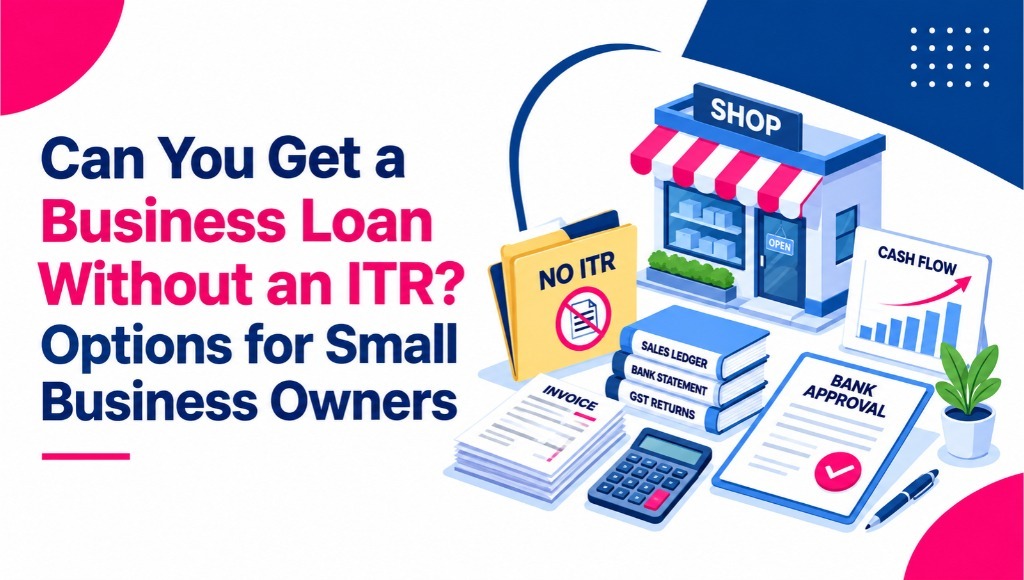
Usually, banks require the submission of ITR forms in order to assess the annual earnings of the businessman or business owner. This helps in analyzing whether the person will be able to repay the loan or not within the stipulated time frame. But, sometimes there are certain institutions that consider other financial documents in assessing the ability of the person to repay the loan. Such documents could be:
- Business bank statements showing regular transactions.
- GST returns indicating business turnover.
- Sales and purchase invoices.
- Business registration certificates.
- Financial statements prepared by an accountant.
- Other income or cash flow records accepted by the lender.
For instance, a shop owner who has not submitted ITR but has been recording all his bank transactions and GST-related paperwork can still be approached by some lenders. The conditions differ from one institution to another, and some might still ask for the ITR paperwork especially for loans that have a larger amount.
Hence, it is recommended to verify their qualifications and paperwork beforehand.
6 Alternative Documents You Can Submit Instead of ITR
If you are applying for a business loan without income proof in the form of an ITR, other financial and business records may help demonstrate your repayment capacity.
Here are six documents that lenders may consider.
1. Bank Statements
Bank statements are among the important documents used to evaluate a business’s financial activity. You may be asked to provide the previous 6 to 12 months of bank statements, depending on the lender’s requirements.
These statements help lenders understand:
- Regular business deposits and withdrawals.
- Monthly cash flow.
- Customer payments and supplier transactions.
- Existing loan repayments.
- Overall financial activity.
Maintaining a separate business bank account and recording regular transactions can make your loan application easier to assess.
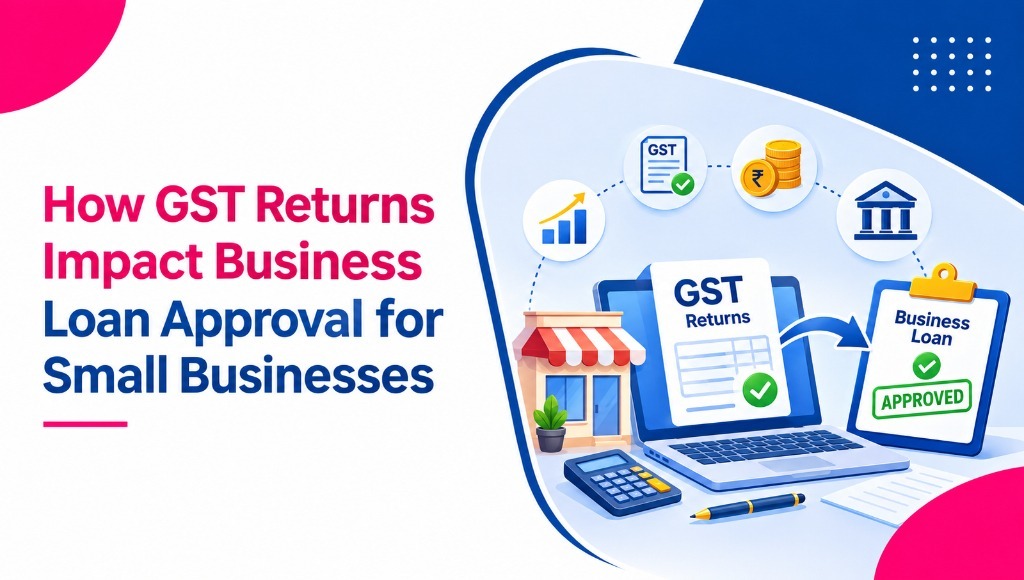
2. GST Returns
If your business is registered under GST, your GST returns may help demonstrate its financial activity and turnover.
Lenders may request documents such as:
- GSTR-1, which contains details of outward supplies.
- GSTR-3B, which provides a summary of GST liabilities and input tax credit.
These documents will allow financial institutions to understand the amount of business sales and activities that you conduct. It is important to note that GST documents alone cannot determine your net profit or ability to make repayments.
3. Udyam Registration Certificate
The Udyam Registration is the official registration of the Government for those Micro, Small & Medium Enterprises (MSMEs), which qualify. An Udyam Registration Certificate is beneficial for establishing the MSME identity of your business. Your business loan application can be benefited through it as well.
Small business owners can apply through the official Udyam Registration Portal. Registration does not guarantee loan approval, but it may help when applying for eligible MSME financing schemes.
4. Business Registration Documents
Business registration documents help verify that your business is legally established and operating.
Depending on your business structure, lenders may request:
- Shop and Establishment Certificate.
- Trade licence.
- Partnership deed.
- Certificate of Incorporation.
- Business address proof.
- Business PAN, where applicable.
These documents help lenders verify business ownership, legal identity and operational details. Even if you do not have an ITR, maintaining updated business registration documents can strengthen your application.
5. Sales and Purchase Records
Records of sales and purchases can give you some more insight into your business activities. The said records may prove especially helpful for small businesses such as retail outlets, wholesalers, traders, and self-employed businessmen who keep track of their business activities.
Examples include:
- Sales invoices.
- Purchase bills.
- Supplier payment records.
- Customer transaction details.
- Daily sales registers.
- Cash flow records.
Consistent sales and purchase records can help demonstrate that your business is actively generating revenue.
6. Financial Statements
Financial statements provide a broader picture of your business’s financial condition.
Depending on the lender, you may submit:
- Profit and loss statements.
- Balance sheets.
- Cash flow statements.
- Provisional financial statements.
Such documents will assist lenders in getting information about income, expenses, assets, liabilities, and profitability of the business. In case you have no financial statements, you can seek help from an accountant to prepare business records. It should be remembered that such documents cannot serve as alternatives to ITR.
5 Business Loan Options for Small Business Owners Without ITR
Small business owners have several financing options to explore. The availability of these options depends on the applicant’s profile, business requirements and lender policies.
1. Business Loans From NBFCs
The Non-Bank Financial Institutions (NBFCs) provide business loans to eligible self-employed people, businessmen and MSMEs. In some cases, there could be a difference in documentation requirement by some of these NBFCs than that required for the bank loan products.
Potential benefits include:
- Financing options for different business requirements.
- Alternative income assessment methods with selected lenders.
- Loan products for working capital and business expansion.
- Different repayment tenure options.
However, NBFC loans may carry higher interest rates or processing charges than some bank loans.
Before applying, compare the annual interest rate, processing fees, repayment tenure, foreclosure charges and total borrowing cost.
2. Pradhan Mantri Mudra Yojana (PMMY)
The Pradhan Mantri Mudra Yojana (PMMY) is a government-backed program aimed at providing finance to eligible non-corporate/non-farm small and micro enterprises.
This program helps entrepreneurs obtain finance for various purposes including buying machinery and other resources.
Can you get a Mudra loan without an ITR?
Some borrowers, especially those who want to borrow smaller amounts, may be assessed without needing to provide ITR documents. But the document requirements vary depending on the type of loan and borrower profile. Other documents, including identity proof, address proof, bank statement and business details, may also be necessary.
You can explore the scheme through the official Department of Financial Services website.
3. Secured Business Loans
A secured business loan is a financing option in which the borrower provides eligible collateral to the lender. This collateral reduces the lender’s risk and may help applicants who cannot provide conventional income documents.
Common secured financing options include:
- Loan against property.
- Loan against fixed deposits.
- Loans against other eligible assets.
For instance, a shopkeeper who requires money for purchasing more stock can consider applying for a secured loan. However, securing the loan by pledging an asset does not absolve the lender from the obligation of determining the borrowing power of the borrower. In case the borrower is unable to make payment, the lender will act against the pledged asset.
4. Microfinance and Small-Ticket Business Loans
Microfinance institutions provide financial services to eligible individuals and small businesses that may have limited access to traditional banking facilities.
These financing options can support small-scale business activities, including:
- Street vending.
- Small retail shops.
- Tailoring businesses.
- Local trading activities.
- Home-based enterprises.
Microfinance and small-ticket loans may have different documentation and eligibility requirements.
Applicants should check the lender’s regulatory status, interest rate, repayment schedule and applicable charges before accepting an offer.
5. MSME Loans Under CGTMSE
The Credit Guarantee Fund Trust for Micro and Small Enterprises (CGTMSE) helps eligible lending institutions through provision of credit guarantee for eligible loans extended to micro and small enterprises. The objective is to help the lending institutions give credit to the eligible enterprises without the need for collateral and third party guarantees. The notable fact is that the CGTMSE does not lend to the business people but only offers guarantee cover to the lending institutions who offer credit.
Small business owners may contact participating banks or any eligible financial institutions to seek loan financing from the scheme. It is necessary to note that there is no automatic waiver of the requirement for ITR documents simply because of CGTMSE cover.
For details, visit the official CGTMSE website.
Eligibility Criteria for a Business Loan Without ITR
Even if you do not have a filed ITR, lenders may evaluate several other factors before approving your application.
The common eligibility requirements include:
1. Age: Applicants generally need to meet the lender’s minimum and maximum age requirements.
2. Business Ownership: You should be able to establish your ownership or association with the business through valid documents.
3. Business Experience: Some lenders prefer applicants who have been operating their businesses for a minimum period.
4. Monthly Turnover: Your business revenue and transaction history may help demonstrate financial activity.
5. Credit Score: Your credit history and previous repayment behaviour can influence loan approval and interest rates.
6. Existing Financial Obligations: Lenders may review your existing EMIs, outstanding loans and other financial commitments.
7. Bank Transaction History: Regular business transactions can help demonstrate cash flow and financial stability.
Eligibility requirements differ between banks, NBFCs and government-supported lending schemes. Meeting the basic criteria does not guarantee loan approval.
Conclusion
Obtaining a business loan without ITR in India is still a possibility for small business owners, shopkeepers, traders, and those who are self-employed. While most banks and lenders usually need ITR documents, there might be certain financial institutions that could use other kinds of documents to gauge your business activities and ability to pay back the borrowed amount.
Bank account statement, GST, Udyam registration, business receipts, invoices and accounts can prove helpful for you. You should also try out NBFC financing, Mudra loan, secured business loan, microfinancing, or MSME financing schemes.
Before applying for any such business loan, you must do a comparative analysis to see which loan suits your business earnings and repayment capacity.
Are you looking for suitable business financing? Then check out the available business loan options via BrowseLoan.
Frequently Asked Questions
1. Can I get a business loan without ITR in India?
Yes, some banks and NBFCs may consider business loan applications without an ITR, depending on their lending policies. They may evaluate alternative documents such as bank statements, GST returns, sales records and business registration certificates.
2. Which documents are required for a business loan without ITR?
Commonly requested documents may include Aadhaar card, PAN card, bank statements, GST returns, Udyam Registration Certificate, business registration documents, sales invoices and financial statements. Exact requirements depend on the lender.
3. Can I get a Mudra loan without filing an ITR?
It may be possible, depending on the loan category and lending institution. ITR requirements are not uniform across all Mudra applications. Applicants should confirm the applicable documentation requirements with the bank or lending institution.
4. Can self-employed individuals get business loans without income proof?
Some lenders may consider self-employed applicants using alternative financial records, such as bank statements, business invoices, GST returns and cash flow statements. However, lenders still need to assess the applicant’s ability to repay the loan.
5. Is a bank statement enough to get a business loan?
Not necessarily. Bank statements can help demonstrate regular business transactions and cash flow, but lenders may also request identity proof, business registration documents, GST returns or other financial records.